

Ever found yourself wondering what that mysterious pedal on the left does? Spoiler alert: it’s not just for dramatic foot-stomping during traffic jams. Understanding “cual es el freno del carro” can save you from some seriously awkward moments behind the wheel.
Understanding Car Brakes
Brakes play a critical role in vehicle safety and control. Familiarity with different types and their operation enhances overall driving skills.
Types of Car Brakes
Disc brakes represent one common type, often found in modern vehicles. These brakes utilize a disc that rotates with the wheel and clamp down to create friction. Drum brakes, another variant, feature a drum that rotates inside and has brake shoes that expand against it. Anti-lock braking systems (ABS) prevent wheel lockup during hard stops, promoting stability and steering control. Parking brakes, usually mechanical, secure the vehicle when stationary. Each type offers unique advantages for specific driving conditions and vehicle designs.
How Brakes Work
Brakes function by converting kinetic energy into thermal energy through friction. Pressing the brake pedal activates the brake system, sending hydraulic fluid through the lines. This fluid applies pressure to either the brake pads in disc brakes or the brake shoes in drum brakes. Friction then occurs between the brake components and the rotors or drums, slowing down or stopping the vehicle. In ABS systems, sensors monitor wheel speed and adjust braking pressure to maintain traction and control, enhancing safety during sudden stops.
Common Brake Problems
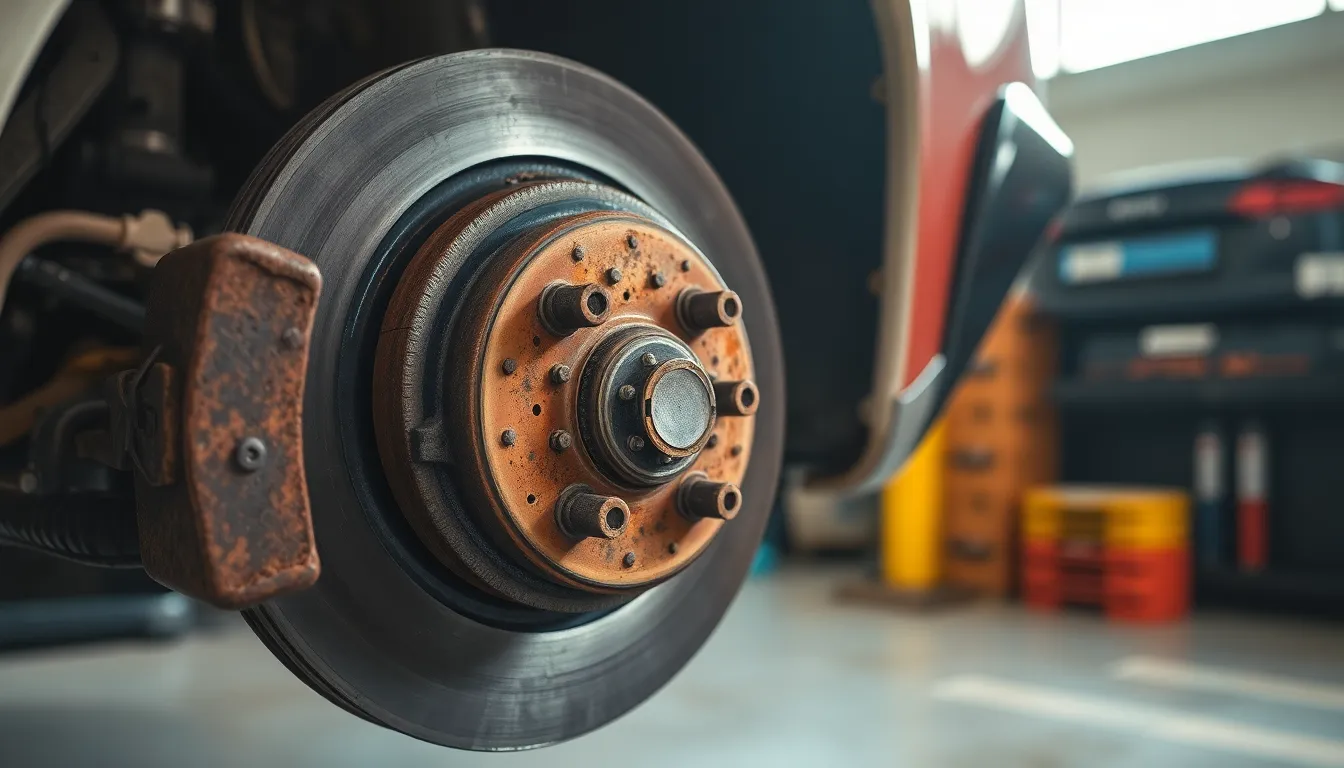
Brake issues can compromise safety and lead to costly repairs. Recognizing early signs is crucial for maintaining optimal performance.
Signs of Brake Issues
Unusual sounds often indicate brake problems. For instance, squeaking or grinding noises suggest worn-out brake pads. Another sign includes a spongy or soft brake pedal, signaling potential fluid leaks or air in the brake lines. When the vehicle pulls to one side during braking, this may point to uneven brake wear or malfunctioning hardware. Additionally, a warning light on the dashboard might arise, suggesting immediate inspection.
Maintenance Tips
Regular maintenance enhances brake safety and longevity. Check brake fluid levels every month to ensure proper operation. Inspect brake pads for wear at least twice a year, replacing them as needed. Clean brake components to prevent dust and debris buildup, which can affect performance. Rotating tires promotes even brake wear, extending the lifespan of brake components. Lastly, schedule professional inspections annually to identify issues before they escalate.
Choosing the Right Brake System
Selecting the appropriate brake system is crucial for safety and performance. Various factors influence this decision, ensuring drivers find a match for their needs.
Factors to Consider
Consider vehicle type when choosing brakes. Sedans typically benefit from disc brakes due to their heat dissipation capabilities. Performance-oriented vehicles might require high-performance pads and rotors to enhance responsiveness. Driving habits also play a role; frequent stop-and-go traffic demands brakes with high durability. Additionally, climate impacts brake performance; wet or icy conditions often suggest the use of anti-lock braking systems for added control. Regular maintenance becomes essential to ensure optimal brake functionality, regardless of the system selected.
Recommended Brands
Look to established brands known for reliability. Companies like Bosch and Akebono provide high-quality brake pads and rotors. Raybestos is celebrated for its extensive range of brake components, suitable for various vehicles. For performance enthusiasts, Brembo specializes in high-performance braking systems that enhance stopping power. Additionally, Wagner offers affordable yet effective solutions for everyday drivers. Investing in trusted brands ensures consistent performance and safety on the road.
Understanding the brake system is crucial for every driver. A well-maintained brake system not only ensures safety but also enhances driving confidence. By recognizing the signs of potential issues and adhering to maintenance recommendations, drivers can avoid costly repairs and dangerous situations.
Choosing the right brake system tailored to specific needs is equally important. With reliable brands available and proper care, drivers can enjoy a safer driving experience. Prioritizing brake knowledge and maintenance is a smart investment in vehicle safety and performance.